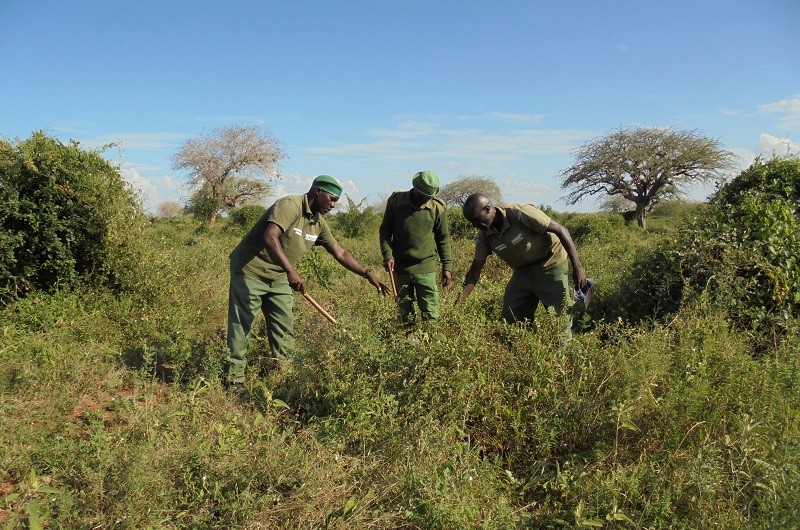
The Conservancy
Demonstrating protecting wildlife and improving livelihoods aren't competing goals—they're one mission.
The Campsite
Pitch a tent, sleep under the stars and contribute directly to keeping one of Kenya’s essential ecosystems connected and thriving.
The Ranch
Where economic productivity, and environmental protection are not competitors but partners in sustainable development and protection of vital corridors and ecosystems.
Attractions & Activities
Things To Do in Kasigau
Kasigau Wildlife Conservancy is a 52,305-acre, community-led conservancy. It connects the Greater Tsavo East and Tsavo West National Parks of Kenya with the Mkomanzi Reserve in Tanzania, providing a splendid getaway for camping, wildlife safaris, birdwatching and hiking in addition to climate-smart farming study tours.
A BRIEF ABOUT THE RANCH
Kasigau Ranching Co.
How does Kasigau Ranching differ from traditional ranching operations?
Kasigau Ranching is integrated with Kasigau Wildlife Conservancy. We, therefore, operate within strict conservation parameters designed to protect the corridor connecting Tsavo East and Tsavo West.
What is the relationship between the ranch and the conservancy?
Rather than being separate from conservation efforts, our ranching and operations are integrated with the conservancy's broader mission. Every operation is monitored for environmental impact, and our revenue directly funds conservation work.
What types of livestock does Kasigau Ranching raise?
We focus on breeds and species well-adapted to the landscape, which can thrive with minimal environmental impact while meeting market demand.
How do you ensure livestock grazing doesn't degrade the ecosystem?
We employ several strategies, such as:
(1) Rotational grazing - allow livestock to move regularly, allowing vegetation to recover);
(2) Habitat monitoring - track vegetation health, water quality, and soil condition);
(3) Wildlife corridor protection - maintain and enhance routes critical for wildlife migration;
(4) Seasonal management - adjust livestock presence to align with natural cycles);
(5) Carrying capacity assessments - determine maximum sustainable livestock numbers based on land capacity.
(1) Rotational grazing - allow livestock to move regularly, allowing vegetation to recover);
(2) Habitat monitoring - track vegetation health, water quality, and soil condition);
(3) Wildlife corridor protection - maintain and enhance routes critical for wildlife migration;
(4) Seasonal management - adjust livestock presence to align with natural cycles);
(5) Carrying capacity assessments - determine maximum sustainable livestock numbers based on land capacity.
How can I learn more about operating sustainable livestock prodution?
We welcome visitors interested in learning about sustainable ranching. Visits can be arranged by getting in touch with us via info@kasigauranching.com
READ OUR BLOG
Featured News and Insights
Latest News and Insights from Kasigau
New Committee Rangers Trained
Quisque consectetur purus ut suscipit faucibus. Sed at ornare ligula. Quisque dignissim justo arcu, ut…
  -   Events
Kasigau Hosts Landmark Heritage and Conservation Forum
Quisque consectetur purus ut suscipit faucibus. Sed at ornare ligula. Quisque dignissim justo arcu, ut…
Kasigau Livelihoods Program Launched
Quisque consectetur purus ut suscipit faucibus. Sed at ornare ligula. Quisque dignissim justo arcu, ut…